
Sushi restaurant software built around yields and covers
Trimming yields on fish, cost per plate and per cover, stock on rice, seaweed and seafood, waste under control and sales read by shift. Everything a sushi or all you can eat kitchen needs to keep its margin.
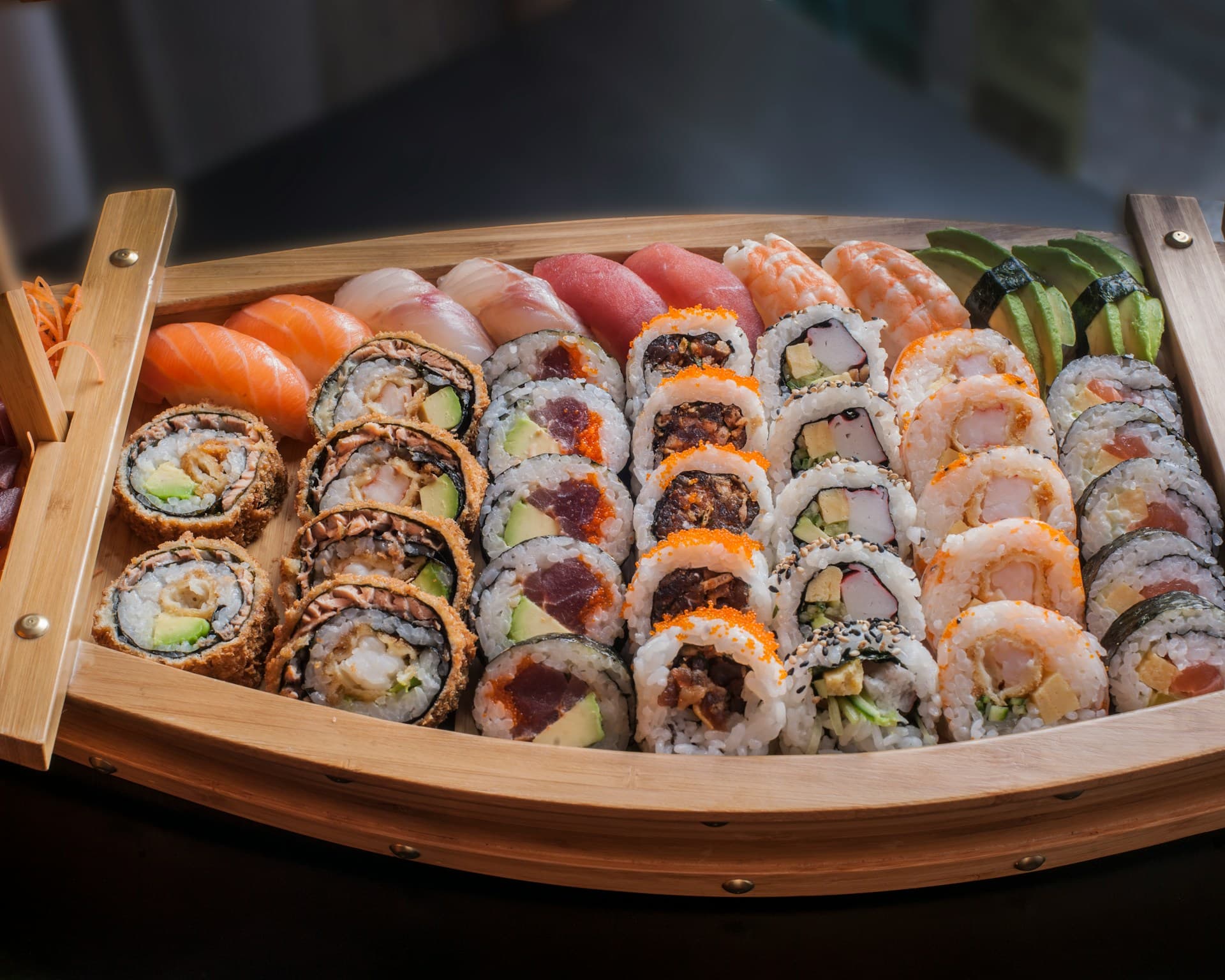
All you can eat is a numbers game, so make the numbers visible
A flat price per cover only works if you know what each cover eats. Plates, variants and portions are specified once, so cost per plate and average cost per cover stop being a feeling at the end of the month.
Fish is bought whole and served in grams. Trimming yields and cuts are part of the cost, together with monthly overheads and labour, which is the difference between a plate that looks cheap and a plate that actually is.
Stock, waste and purchasing stay connected: compare prices by category, build the cart, send the order by email, and see how much of what you buy ends up on a plate rather than in the bin.
Plates, variants and portions specified once
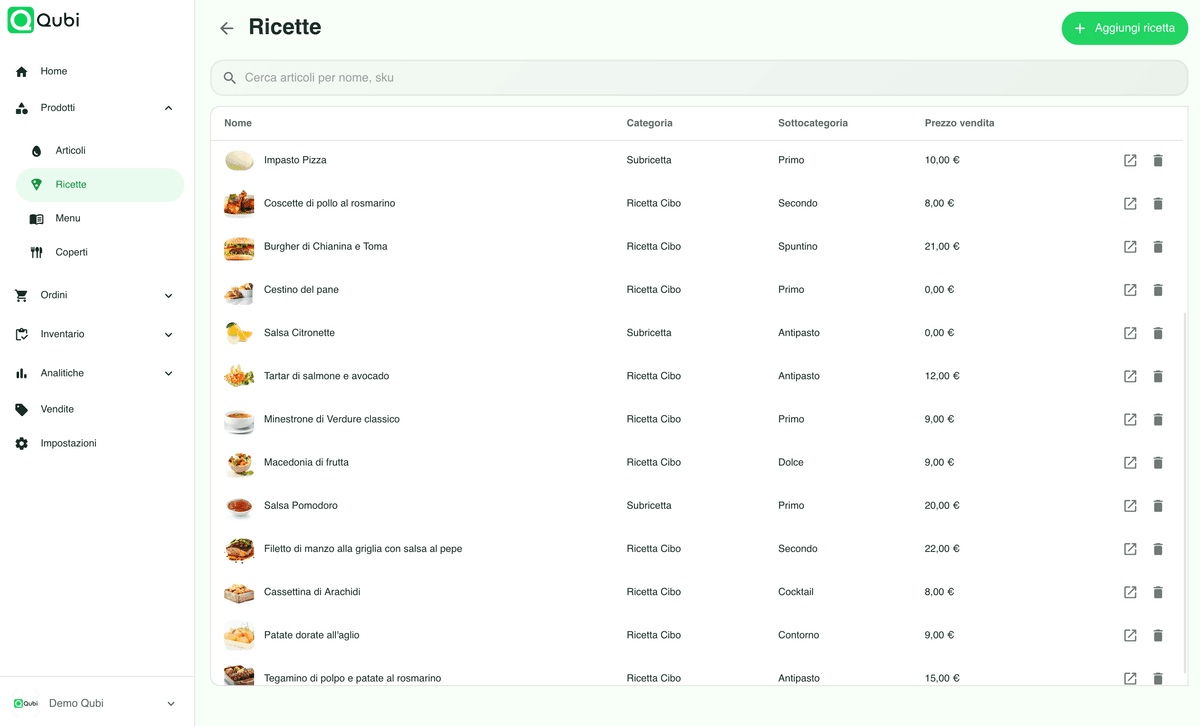
Nigiri, uramaki, sashimi and hot dishes are built from the same components, with portion weights and variants written down. Rolling out a menu change reaches every station at the same time.
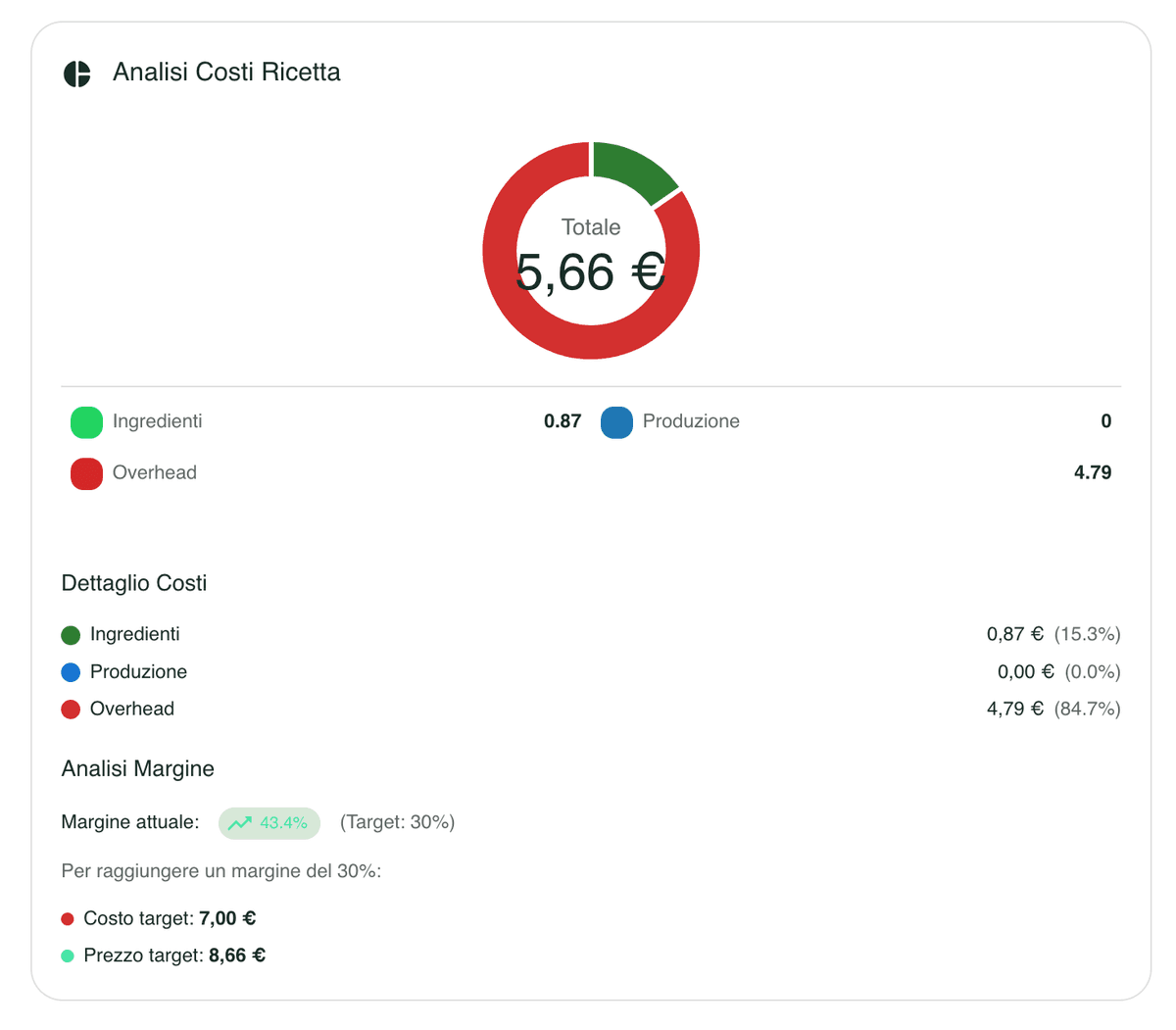
Yields on fish and cuts inside every cost
Whole fish, trimming losses and portion weights feed the cost of each plate, alongside monthly overheads and labour. You get a margin per plate and per category you can price against.
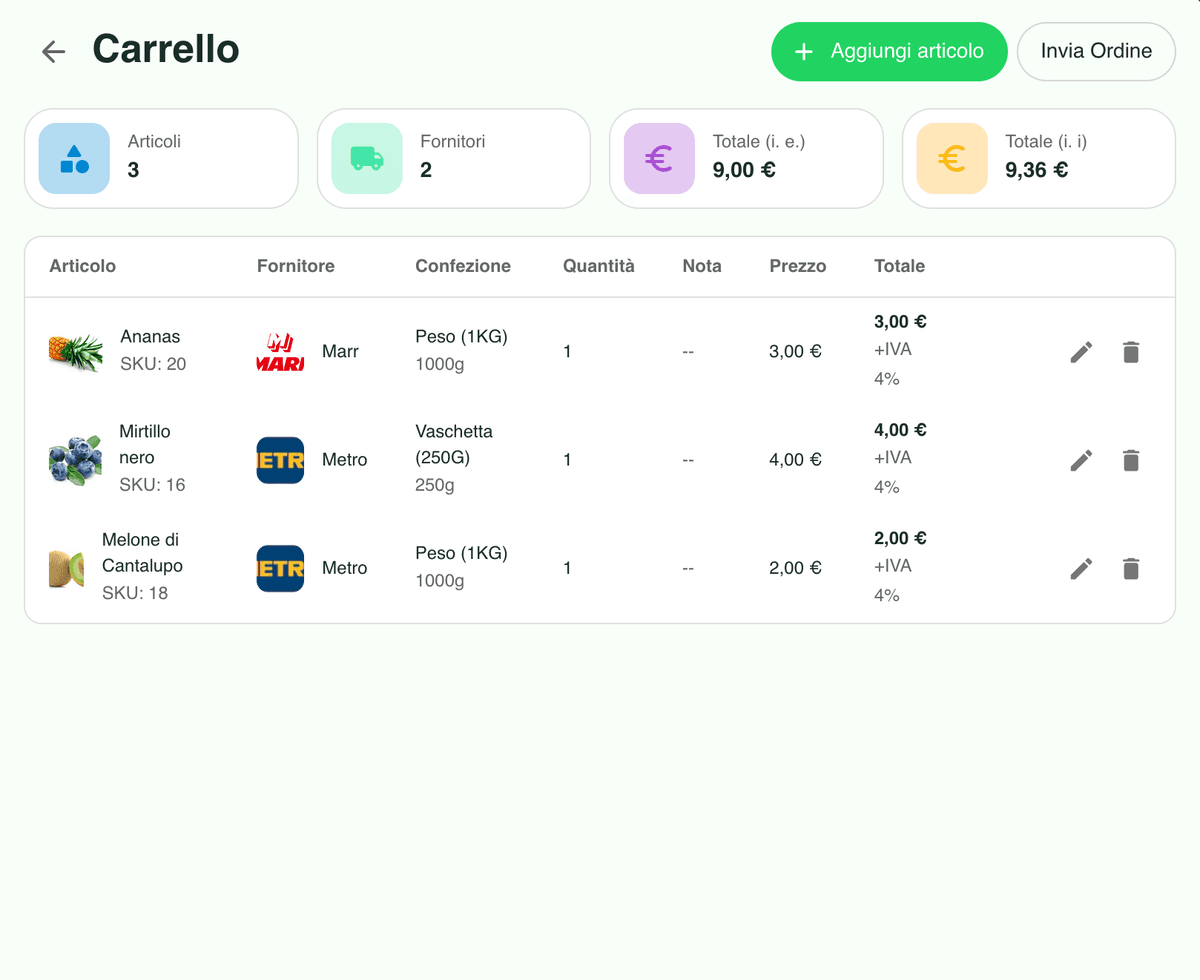
Compare prices by category and send the order
Seafood, rice, seaweed and drinks each have their own suppliers and conditions. Compare them, build a cart and send a complete order by email with delivery details, then import the delivery note from a PDF or a photo.
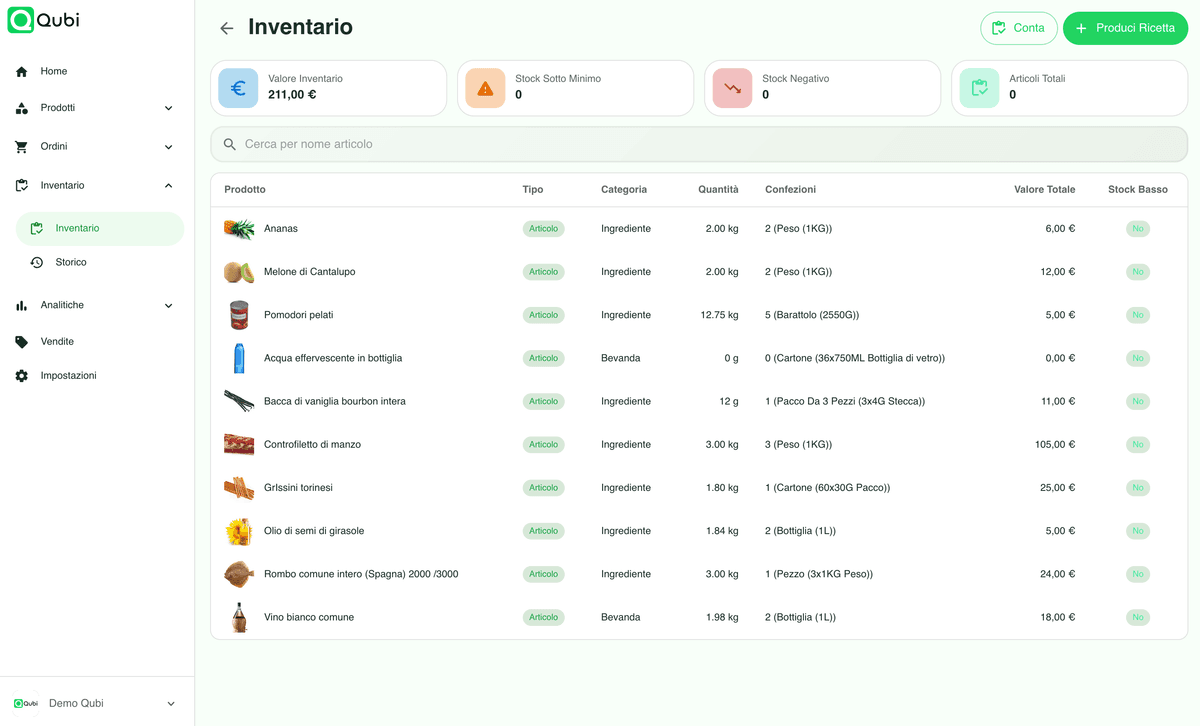
Fresh product tracked, waste measured not guessed
Batches, expiry dates and movements keep fresh product visible, and every write-off is recorded with a reason. Over a few weeks you can see exactly where the all you can eat model is leaking.
Sales by shift, category and cover
Read volumes and margins by shift and category, compare lunch against dinner and weekdays against weekends, and see which plates drive the bill and which ones only drive the cost.
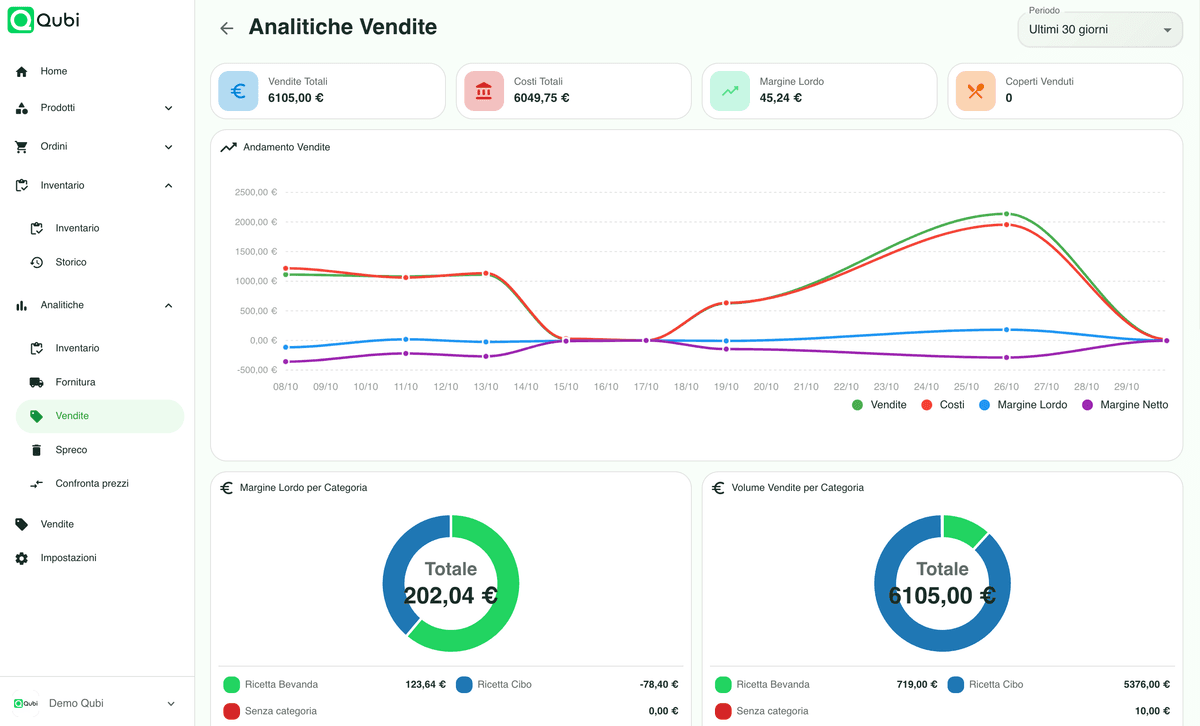
Why all you can eat needs tighter control than à la carte
With a fixed price per cover, every extra gram served is margin you do not get back. Portion specs and measured yields are the only way to keep the offer generous and the business profitable.
Fresh seafood is expensive and short-lived, so batches, expiry dates and waste reasons matter as much as purchase prices when you look at the end of the month.
Reading covers, plates and margins by shift tells you when the model works and when it quietly stops working, in time to change the menu rather than the price list.
Sushi restaurant software FAQ
Yields, cost per cover, purchasing, stock and reporting
Does the costing take trimming yields into account?
Yes. You can record the yield of a whole fish or a cut, so the cost of every plate is based on the grams you actually serve rather than on the price per kilo you paid.
Can I see the cost of an all you can eat cover?
Yes. With plates and portions specified, you can read the cost of each plate and the average cost per cover, then compare it with the price you charge.
How do I keep fresh product under control?
Batches and expiry dates track what came in and when, movements show what was used, and every write-off is logged with a reason so waste becomes a number you can act on.
Can I handle suppliers by product category?
Yes. Each category can have its own suppliers and conditions, and you can compare them before building the cart and sending the order by email.
Does it work on tablets and phones?
Yes. Stock counts, waste entries and temperature checks are designed to be done from a tablet or a phone, right where the work happens.