
Cloud software for farm stays and rural hospitality
For an agriturismo-style property, a working farm that also feeds and hosts guests. Seasonal menus, a real cost for produce you grow, batch tracking and a farm shop that shares stock with the kitchen.
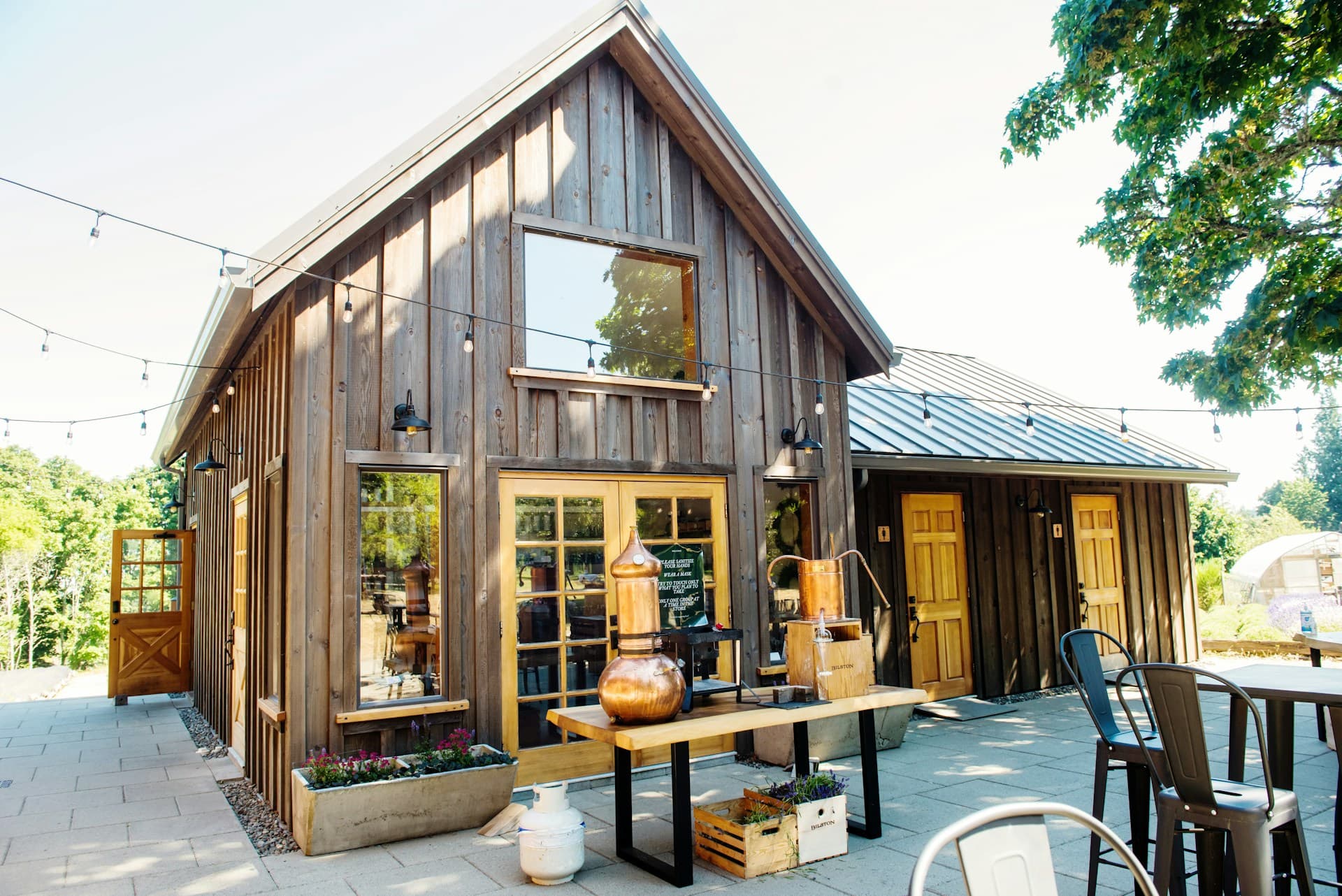
A farm, a kitchen and a shop are one business
On a farm stay the same tomato can end up in a sauce at dinner, in a jar on the shop shelf or in a crate sold at the gate. Three destinations, one stock, and usually three separate notebooks.
Qubi keeps a single record of what you produce, what you buy and what you use, so a dish, a preserve and a direct sale all draw on the same numbers.
That makes the awkward questions answerable: what a seasonal menu really costs, whether the shop is carrying the kitchen, and how much of the harvest never reaches a paying guest.
What a farm stay gets out of Qubi
Menus that follow the harvest
Swap dishes as produce comes in and goes out of season, keep last year's autumn menu on file and bring it back with costs already updated to today's prices.
A cost for what you grow
Produce from your own land is not free. Give it a transfer value and the cost of a dish stays comparable with one made from bought-in goods.
Kitchen and farm shop together
The same jars, oil, wine and cured meats can be served at the table and sold to guests on the way out, with stock and margins tracked for both.
Dishes that change with what is ready to pick
Write preparations once with quantities, yields, steps and photos, then build the menu you are serving this season out of them. When a dish returns next year, the cost is recalculated on today's prices instead of the ones you wrote down last autumn.
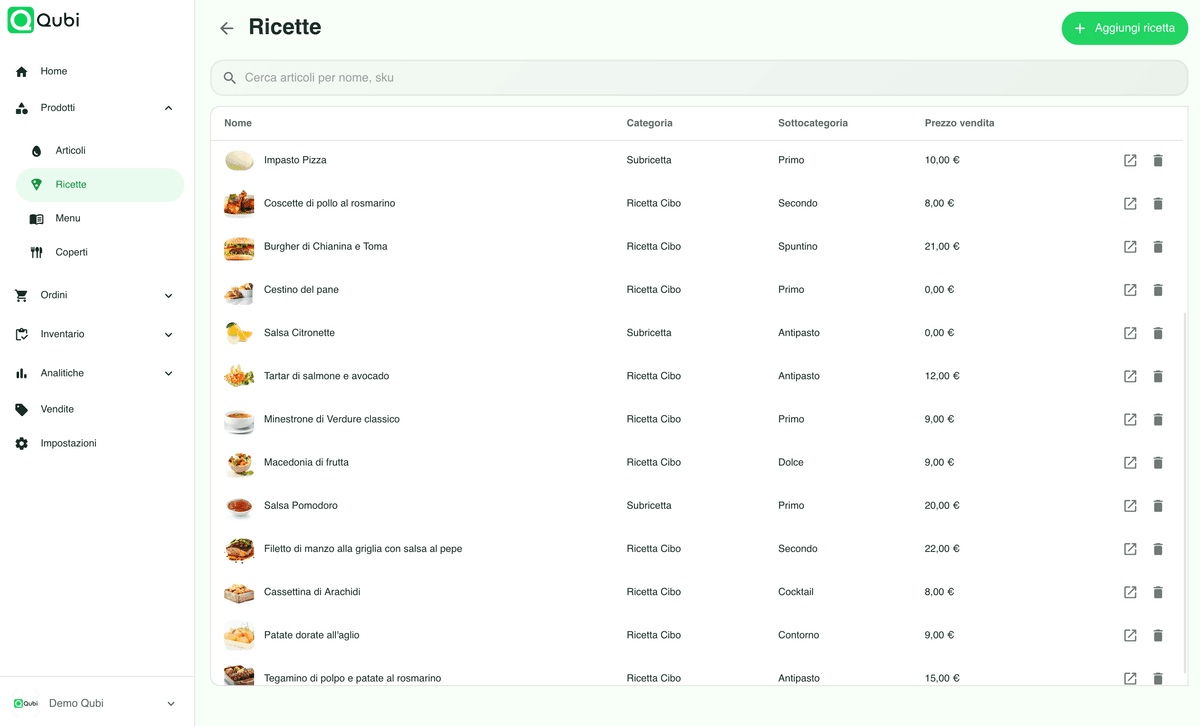
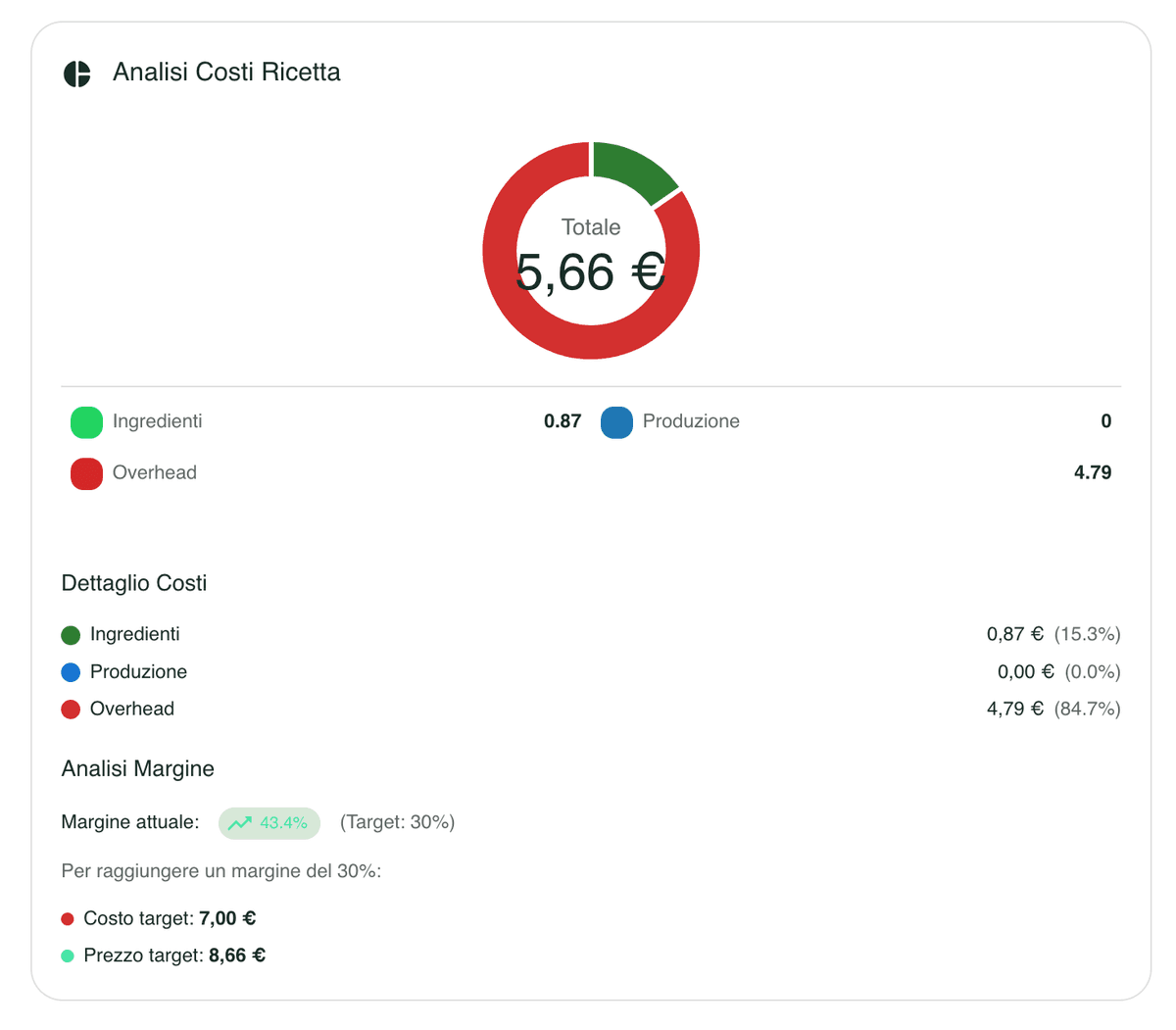
Home-grown produce with a value, not a blank line
Give what you grow an internal value and it behaves like any other input: full cost, yield, portioning and margin. Suddenly you can tell whether the dish everybody praises is also the one paying for the season, and price it accordingly.
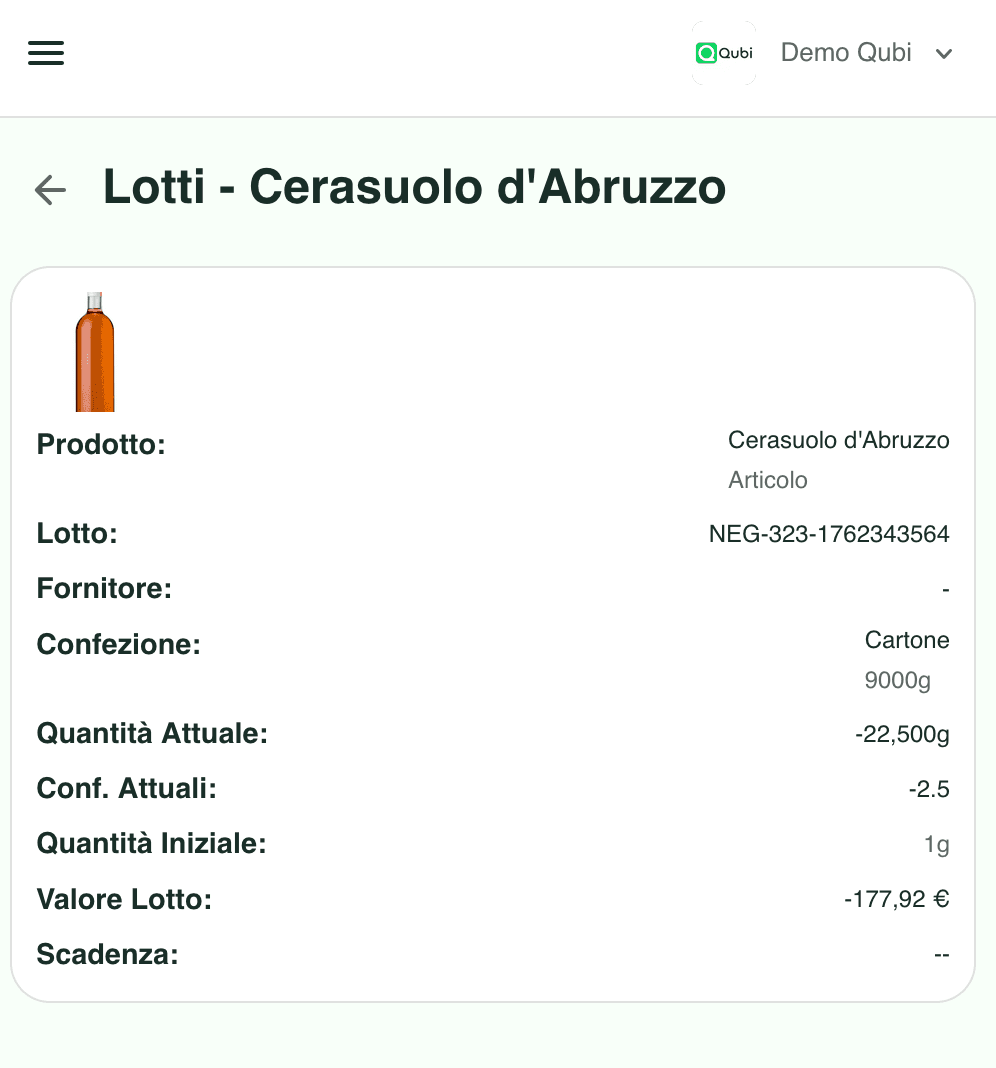
Preserves, cured goods and oil followed by batch
Record production batches with dates and quantities, keep expiry dates visible and get warned before anything has to be discarded. If a customer ever asks where a jar came from, the trail is already there instead of being reconstructed from memory.
What you cannot grow, bought at the right price
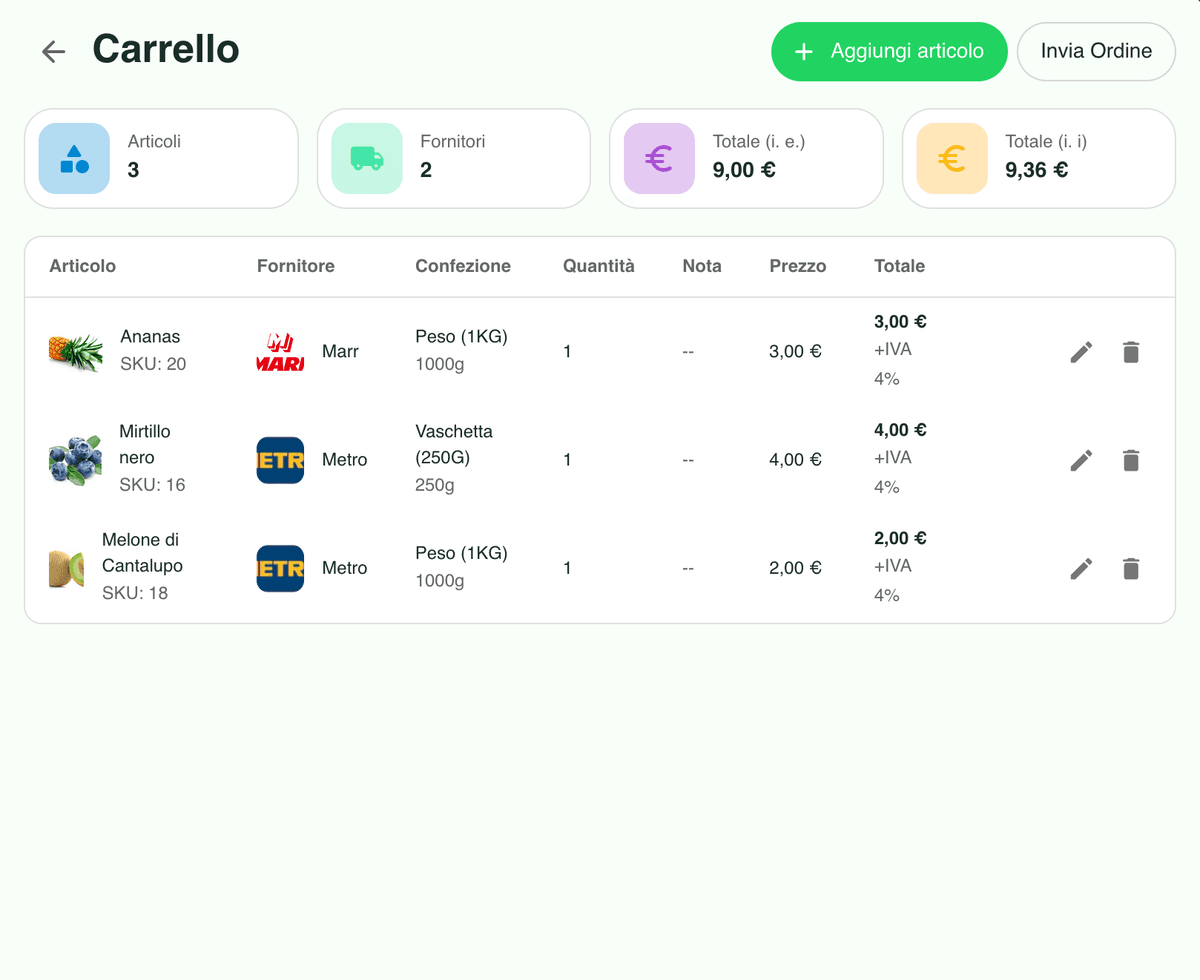
Flour, coffee, packaging and everything else you buy in can be compared across suppliers by price per kilo or litre, ordered from a single cart and sent by email with delivery details. The history makes price increases visible while you can still react to them.
Table, shop and season side by side
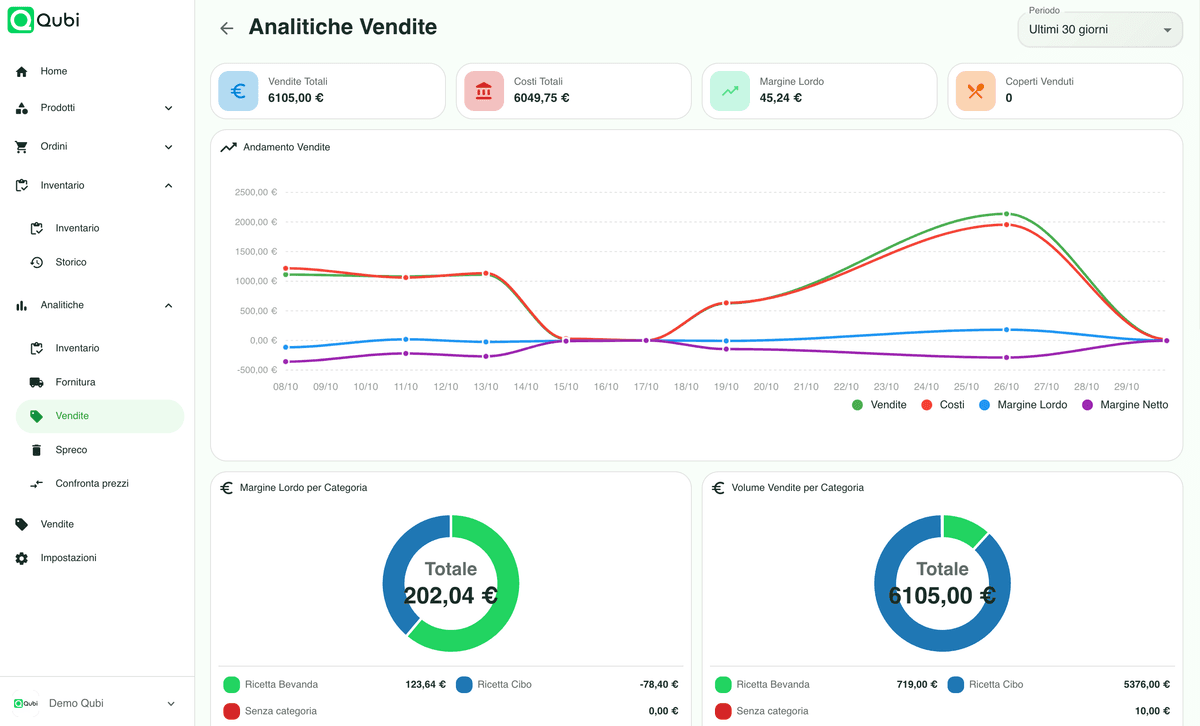
Read sales, consumption, waste and stock value by period and by category, and compare a busy harvest month with a quiet one. It is the difference between knowing the year went well and knowing which part of it did.
Why farm stays put the kitchen on a proper system
Seasonality hides problems. A month that felt busy can still lose money on the plate, and only a cost that updates with prices will tell you.
Traceability is not optional once you produce and sell your own goods. Batches, dates and HACCP checks are easier to keep as a habit than to rebuild before an inspection.
Staff on a farm come and go with the season. Written preparations and portions mean the kitchen keeps its standards even when the team turns over.
Farm stay software FAQ
Practical answers about seasonal menus, home-grown produce, batches and farm shop sales.
What kind of property is this built for?
Farm stays and agriturismo-style properties: a working farm with rooms, a kitchen that cooks mostly from the land around it, often a farm shop and a menu that changes several times a year. The mix of production, hospitality and retail is what the software is designed around.
How do I cost produce I grow myself?
You give home-grown produce an internal value, for example what you would pay a supplier for it or what it costs you to produce. From there, dishes carry a full cost and stay comparable with anything you buy in, which is what you need when you set menu prices.
Can I run different menus in different seasons?
Yes. Dishes and preparations stay on file all year, and you group them into the menu you are serving now. When the same menu comes round again, costs are recalculated on current prices rather than the ones you had last year.
Does it track batches and expiry dates?
Yes. Preserves, cured products, oil and anything else you make or store can be followed by batch with a production date and an expiry date, with warnings before something has to be discarded and a clear trail if you ever need to trace a lot.
Can I use it for the farm shop as well as the kitchen?
Yes. Products can be both an input for the kitchen and something you sell directly to guests. Stock moves out either way, and the reporting shows you the margin on each channel instead of merging them into one number.