
Cloud software for hotel food and beverage
Breakfast, restaurant, bar, room service and banqueting run on the same products and the same purchasing. Qubi keeps costing, stock and orders in one place, with figures you can read outlet by outlet.

Hotel F&B is one operation with very different services
A hotel kitchen serves a buffet at seven in the morning, a plated lunch at one, a bar all afternoon and a wedding on Saturday. The products overlap, the routines do not, and spreadsheets rarely survive the season.
Qubi holds the shared part once: products, preparations, pack sizes, supplier prices and allergen data. Each outlet then works on top of it, with its own menu, its own production and its own numbers.
The result is a cost per cover for breakfast, a margin per dish for the restaurant, a stock value per store room and a purchasing history you can actually use when you renegotiate.
What hotel F&B teams get out of Qubi
Every outlet, one database
Breakfast buffet, à la carte service, pool bar, room service and banqueting share the same products and preparations, with separate figures for each outlet.
Costing that includes the buffet
A hotel breakfast is not sold dish by dish, so Qubi costs it per cover and per production batch, alongside plated dishes and bar service.
Several properties, one back office
Run more than one property with shared products and preparations, per-site stock and permissions that match how your F&B team is organised.
A margin for the restaurant, a cost per cover for breakfast
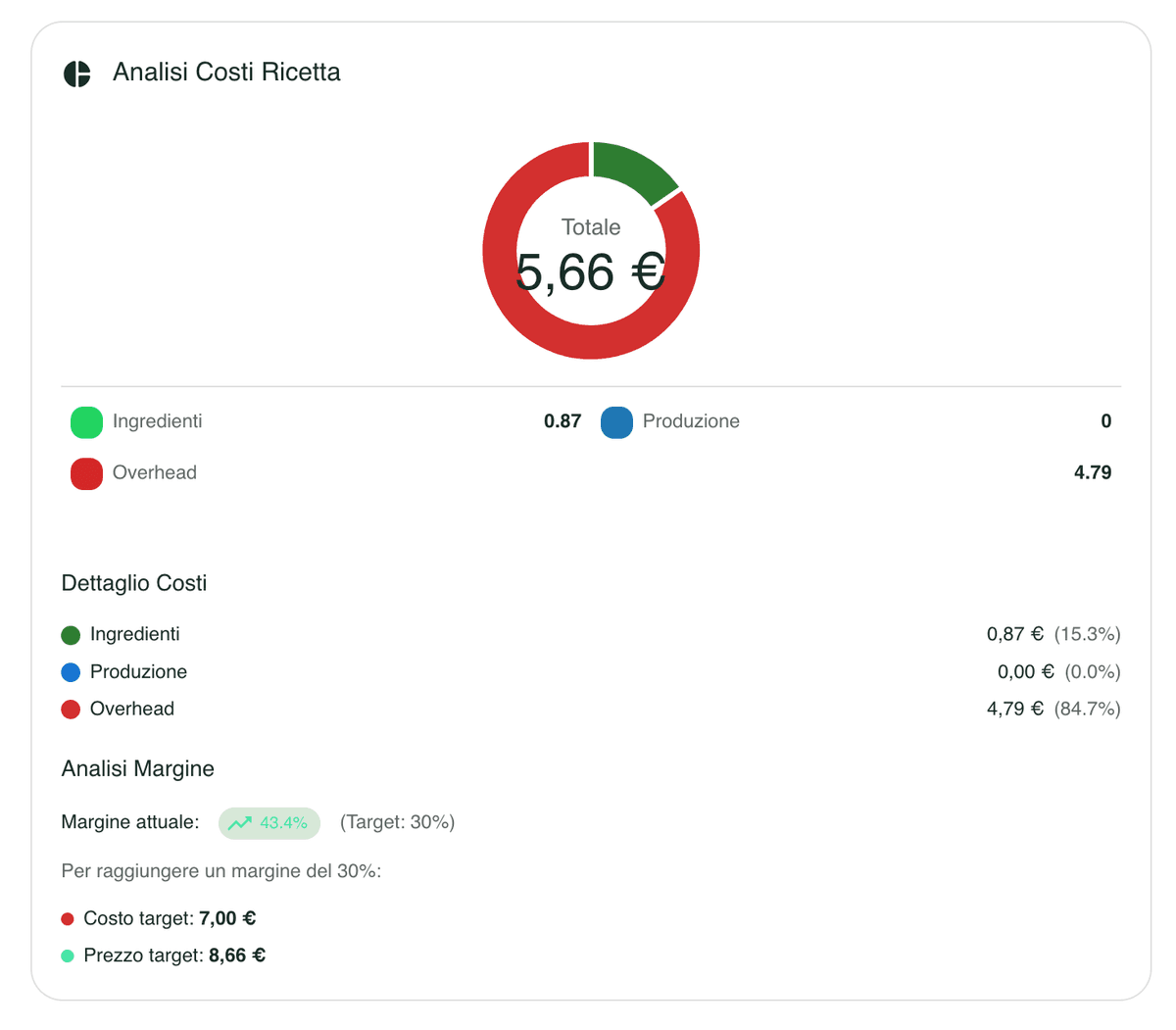
Direct costs, yields, portions and operating costs feed a full cost for every dish and every preparation. Buffet items are costed on what you actually produce, so half board and full board packages can be priced on evidence instead of habit.
One cart, several outlets, cleaner deliveries
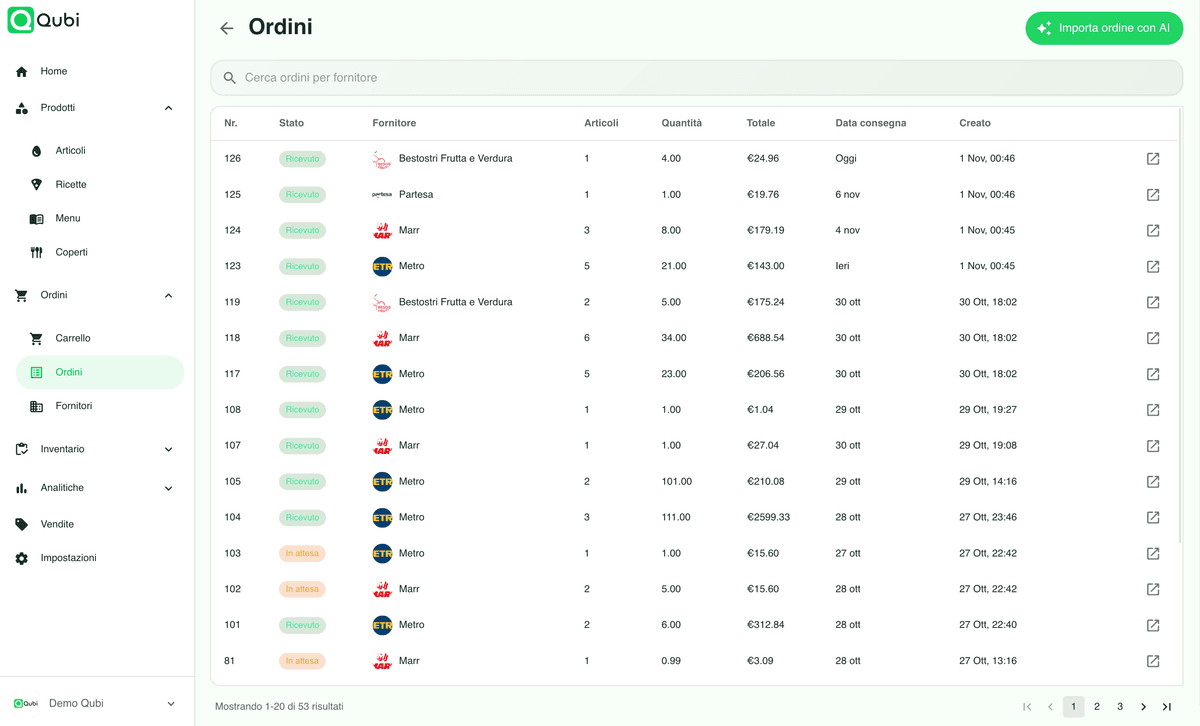
Compare suppliers on the price per kilo or litre, build a cart that covers kitchen, bar and store room, and send orders with the delivery details each site needs. Deliveries can be checked against the order instead of being filed and forgotten.
Store rooms, cellars and bars counted separately
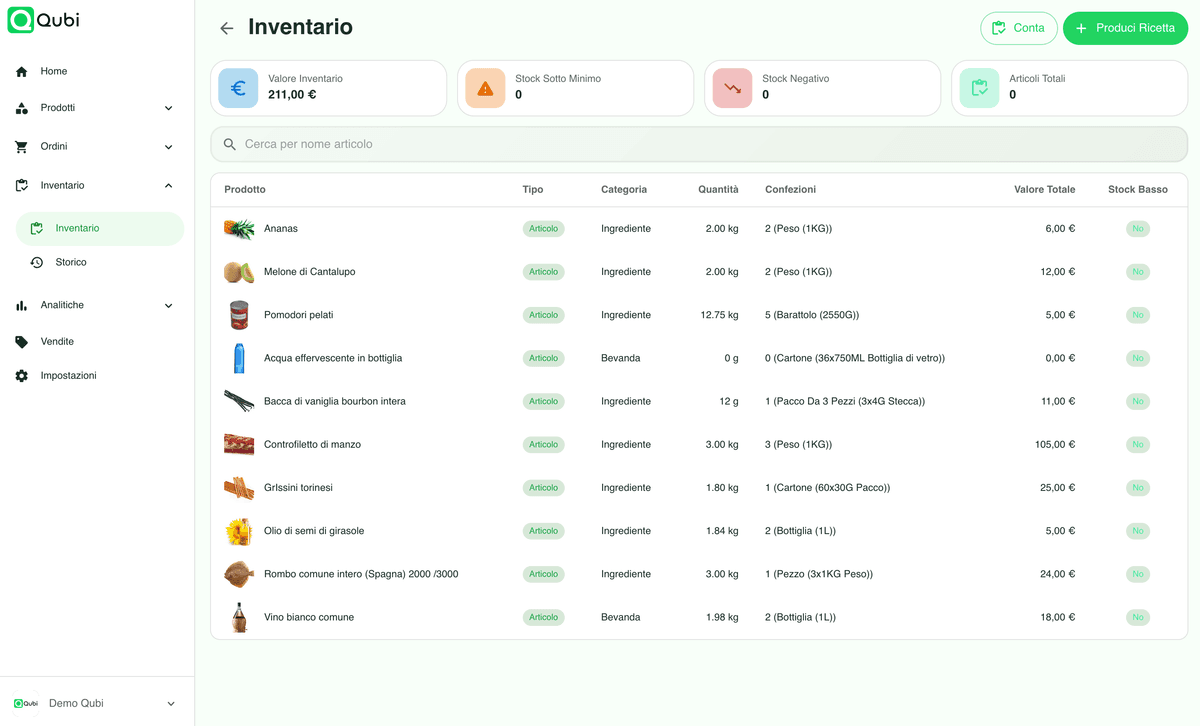
Track stock value, movements and waste per storage area and per period. Counts run on a phone, so the cellar, the pastry section and the pool bar can be counted by different people on the same evening without printed sheets.
Where the margin comes from, service by service
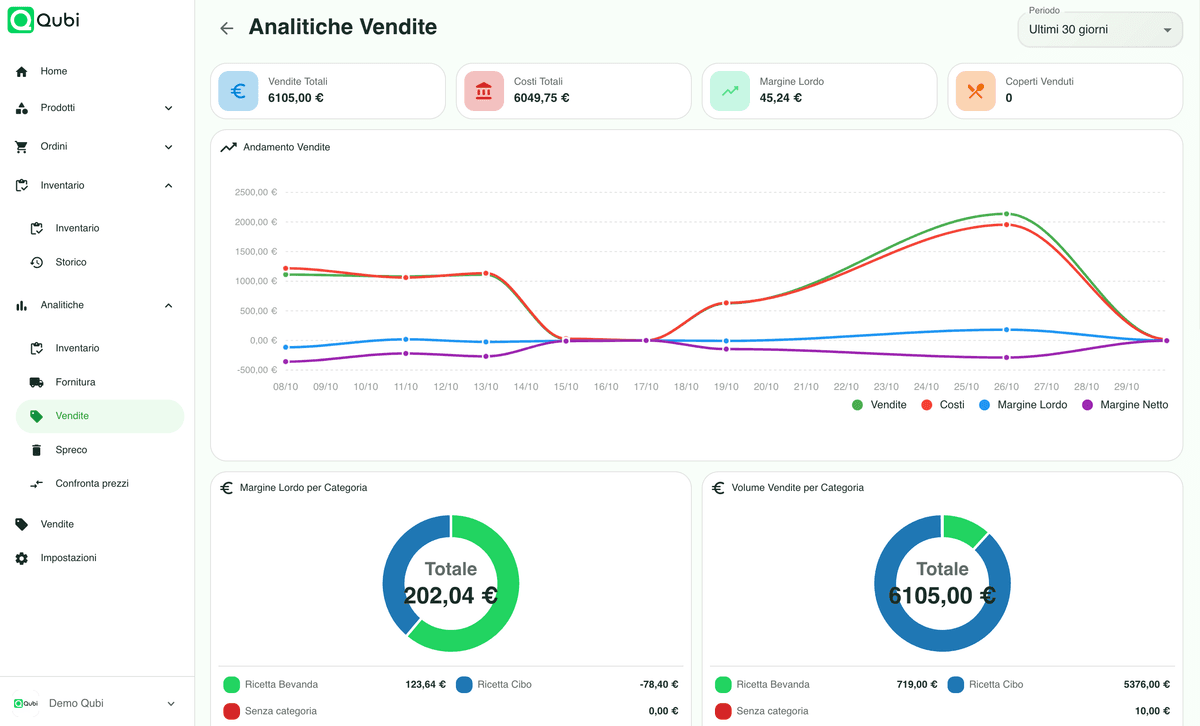
Read sales, consumption and margins by outlet, category and period, and compare a busy August against a quiet November. Occupancy drives food and beverage, and the reporting is built so you can see that relationship rather than guess at it.
Why hotels move food and beverage into the cloud
Seasonal teams change, and the knowledge that lives only in one chef's notebook leaves with them. Written preparations, costs and procedures stay with the property.
Purchasing is where hotel margin quietly disappears. Comparable prices, a clear order history and alerts on increases turn supplier talks into a conversation about numbers.
Owners and general managers want one page, not five files. Consolidated reporting across outlets and properties makes the monthly review short and the decisions obvious.
Hotel software FAQ
Practical answers about outlets, buffet costing, multiple properties and seasonal teams.
Can Qubi handle breakfast, the restaurant and the bar together?
Yes. Each outlet is set up as its own department with its own menu, production and stock movements, while products, preparations and supplier data stay shared, so nothing has to be entered twice.
How do you cost a breakfast buffet?
You build the buffet as a set of preparations and products, record what is actually produced, and Qubi returns a cost per cover you can compare with the rate you charge, rather than a guess based on last year's budget.
Does it support more than one property?
Yes. You can manage several properties from one account, with shared recipes and supplier catalogues but separate stock, counts and reporting for each site, plus consolidated figures for the group.
Can seasonal staff use it without long training?
Yes. Day-to-day tasks such as stock counts, waste logging, deliveries and HACCP temperature checks run from a phone or tablet, and roles limit each person to the screens they actually need.
Can we import supplier price lists?
Yes. You can bring in price lists from CSV files, or let the AI import read a PDF or a photo of a delivery note and match the lines to products already in your catalogue.