
Supplier price comparison to buy better and defend your margin
Qubi puts the real purchase price of every item side by side, so you can see where you are paying too much, which alternatives you have and how much that difference actually costs your business over a year.
What makes a price comparison worth having
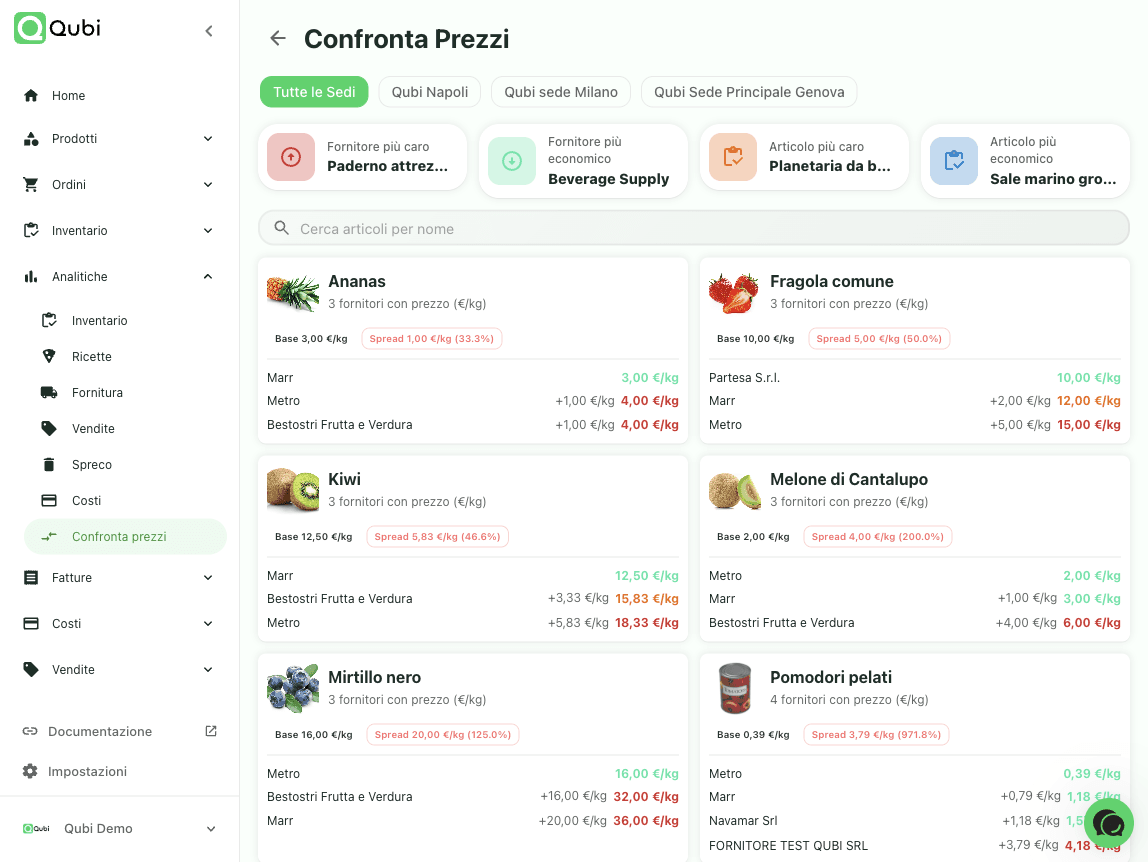
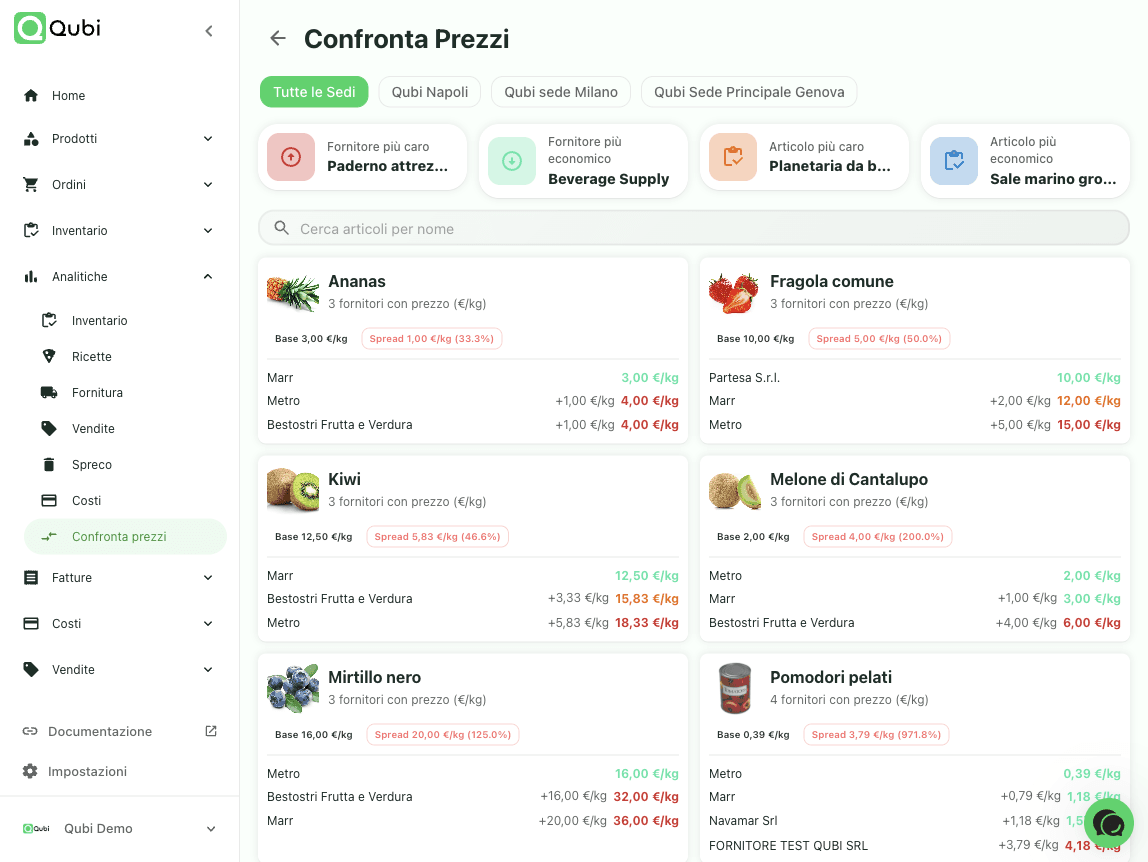
Same item, every source, one screen
See who sells the item you buy and exactly how much the quotes differ, without opening a single spreadsheet.
Dearest and cheapest, upfront
The information that changes a decision surfaces immediately, instead of being rebuilt by hand every few months.
Pack sizes and references, not just names
What you compare are real purchase options that move food cost and orders, not labels that look alike on paper.
Faster, data-driven decisions
You know where to act, when switching source is worth the effort and which items are eating into your margin.
Price history over time
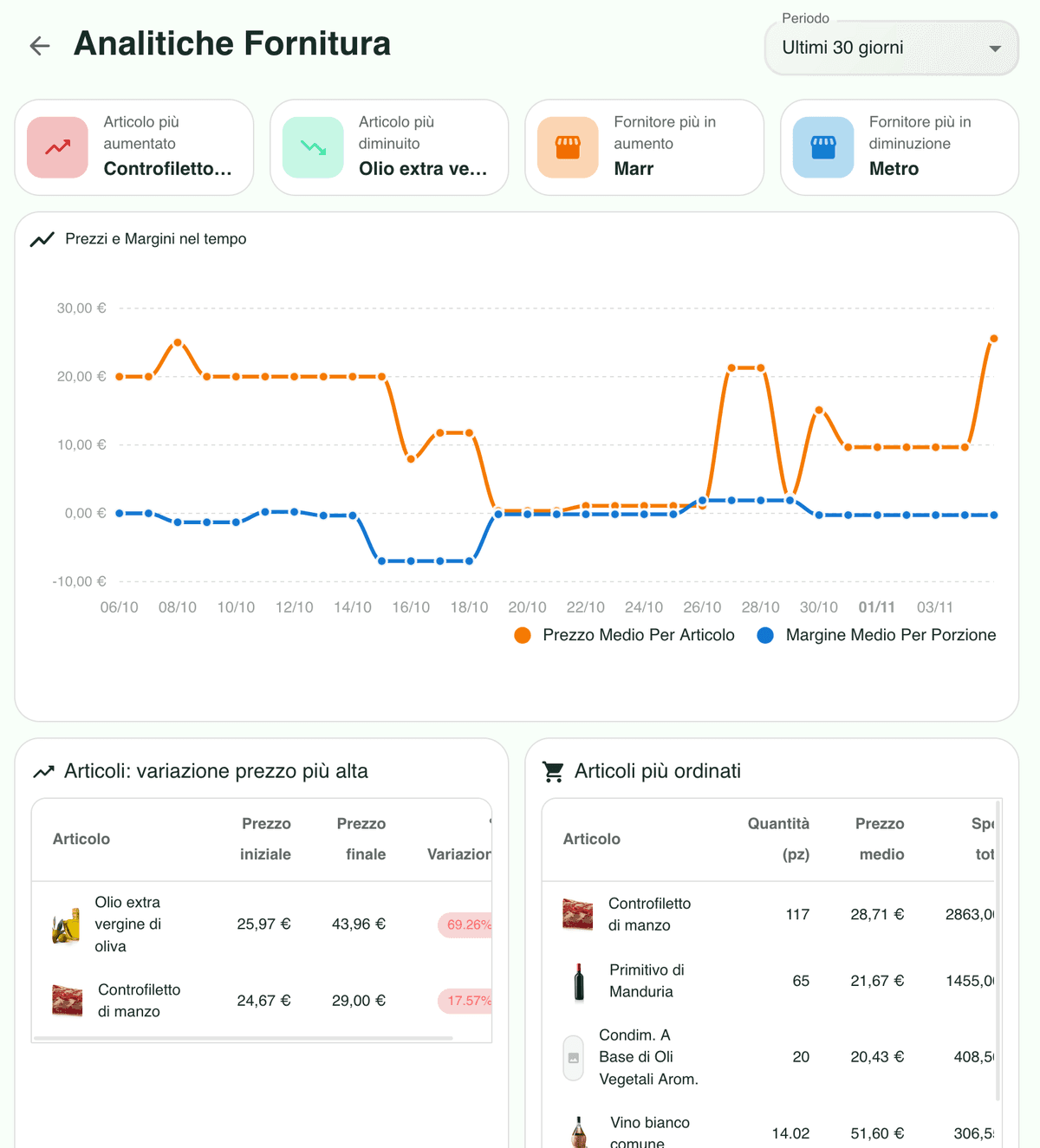
You are not staring at one isolated quote: you can tell a one-off difference from a trend that is settling in.
Focus on the savings that matter
Spend your attention on the items where the gap is genuinely material, rather than chasing tiny variations.
See where you are overpaying without losing an afternoon
In most kitchens the comparison lives in chat threads, PDFs and someone's memory. Qubi brings it into one readable view: the item, the base price, the spread and the alternatives. The gaps that need action become obvious.

Compare the price, but above all the buying context
Knowing an item costs less somewhere else is not enough. You need to know from whom, how often you buy it and on which products the gap really weighs. This page exists to support smarter purchasing, not abstract comparisons.
What you save on purchasing shows up in every dish
Every difference upstream lands on your dishes and on the menu. Comparing what you pay becomes an operational tool for protecting the margin, rather than an administrative exercise nobody looks at twice.
Supplier price comparison FAQ
Common questions on comparing what you pay and using it to buy better every week.
Does it work if I buy the same item from several places?
That is exactly the case it is built for. Qubi gathers the available alternatives for an item and highlights the differences, the spread and which option is actually the better buy.
Can I see who is charging the most and who the least?
Yes. The view surfaces the headline cases straight away and lets you drill into any single item, so you are not rebuilding the comparison by hand every time you order.
Do I need perfectly clean price lists to use it?
No. Tidier data always helps, but the real value is bringing clarity to what you are already paying today, which is usually the part nobody has a clear picture of.
Is this only about purchasing, or also about food cost?
Both. Understanding where you are overpaying lets you act upstream, on the cost of every dish and on the margin of the menu as a whole, not just on a single order.