
Food truck software for a kitchen that moves
A cloud platform for trucks, stalls and street food: menus that change with the pitch, cost and margin per portion, lean stock, waste under control and sales read by event and location.

Mobile first: menus that move and stock that stays lean
Menus, variants and price lists can be updated from a phone between one pitch and the next, which is how it actually works when you trade at markets, festivals and private events.
Costing gives you margin, yields and operating costs in a setting where space, time and stock are all limited, and where one bad buying decision fills the van with product you cannot sell.
Stock, purchasing and reporting keep the load light: enough to get through the rush, not so much that half of it comes home and goes in the bin.
Before the event
Plan the line-up, the quantities and the shopping with a proper base, so you do not set off with the wrong stock or an out-of-date price list.
During service
Menus, variants and portion sizes stay manageable even when you are working from a hatch with two metres of counter and no office.
After the event
Read what you sold, what it earned and what you threw away, per event and per pitch, and set up the next outing better than the last one.
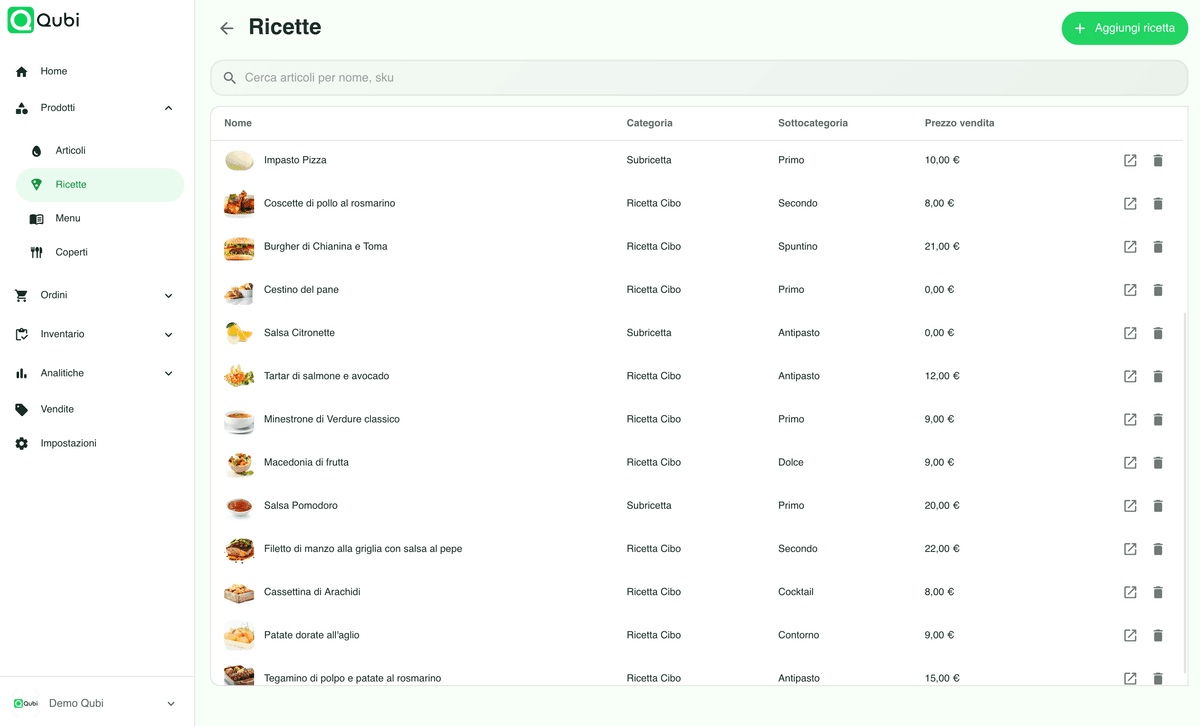
Dishes and variants ready for the next pitch
Keep a single library of dishes and variants and change what you offer for each event, with prices you can adjust quickly without rebuilding anything from scratch.
Yields, portions and a stock list that stays essential
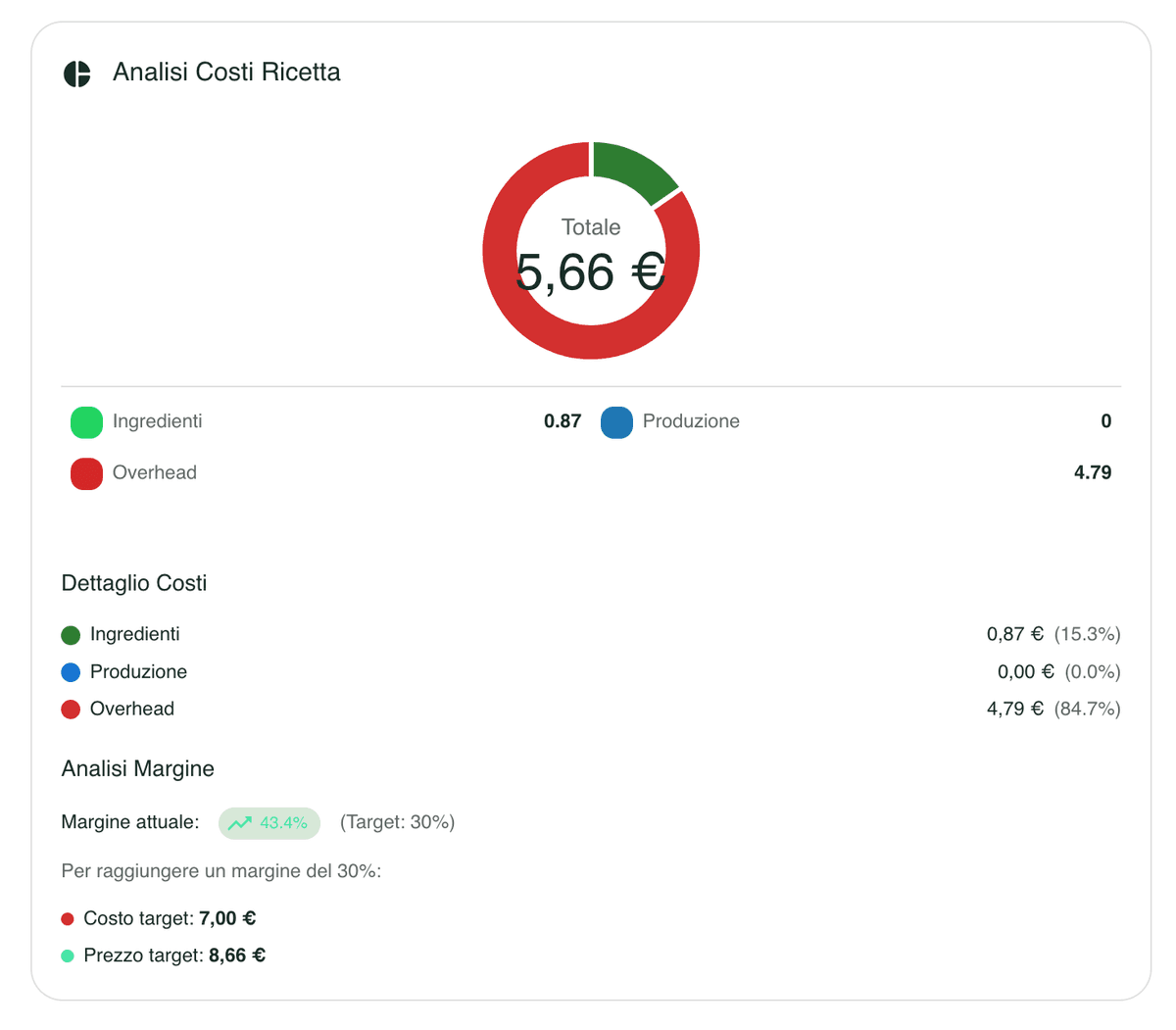
Work out yields and portion sizes for fast turnarounds, so a portion costs what you think it costs and the margin holds even when you are serving three hundred people in four hours.
Movements and waste under control
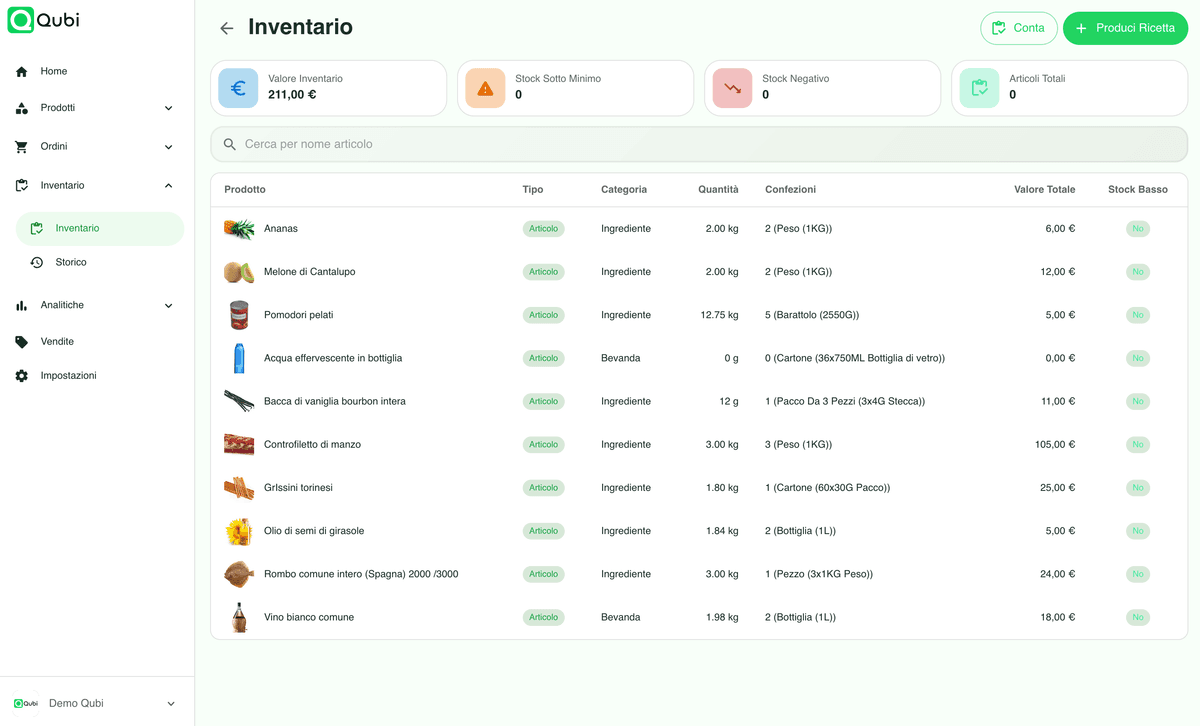
Record what goes out of the van and what gets thrown away, count what is left at the end of a run, and rotate short-life product first so less of it is written off.
Carts, price comparison and orders by email
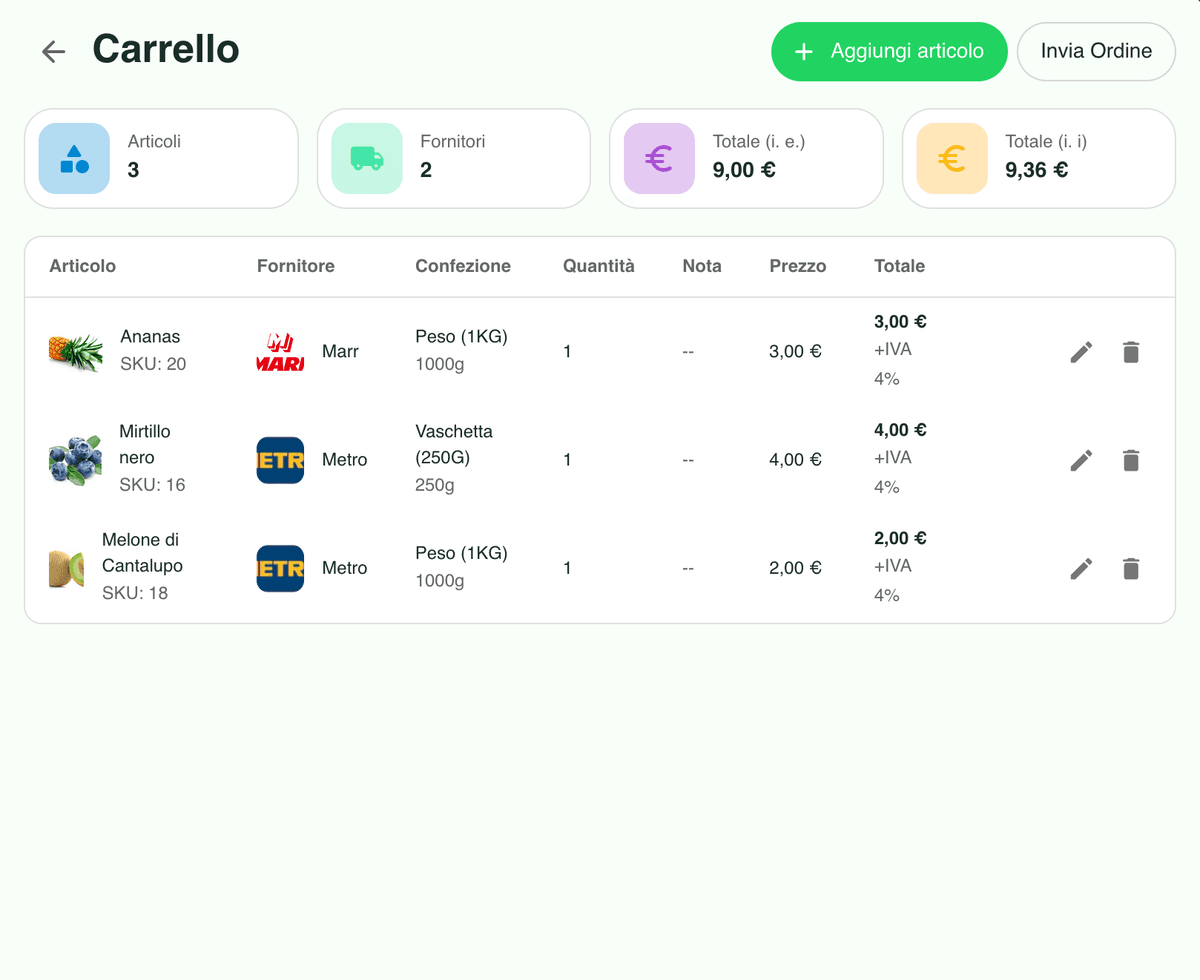
Compare prices and conditions between suppliers, build the cart for the next event and send the order by email with full delivery details, from wherever you happen to be parked.
Sales and margins by event, location and day
Reports show what each outing produced: volumes, margins and waste by event, pitch and period, so you can decide which dates are worth booking again and which are not.
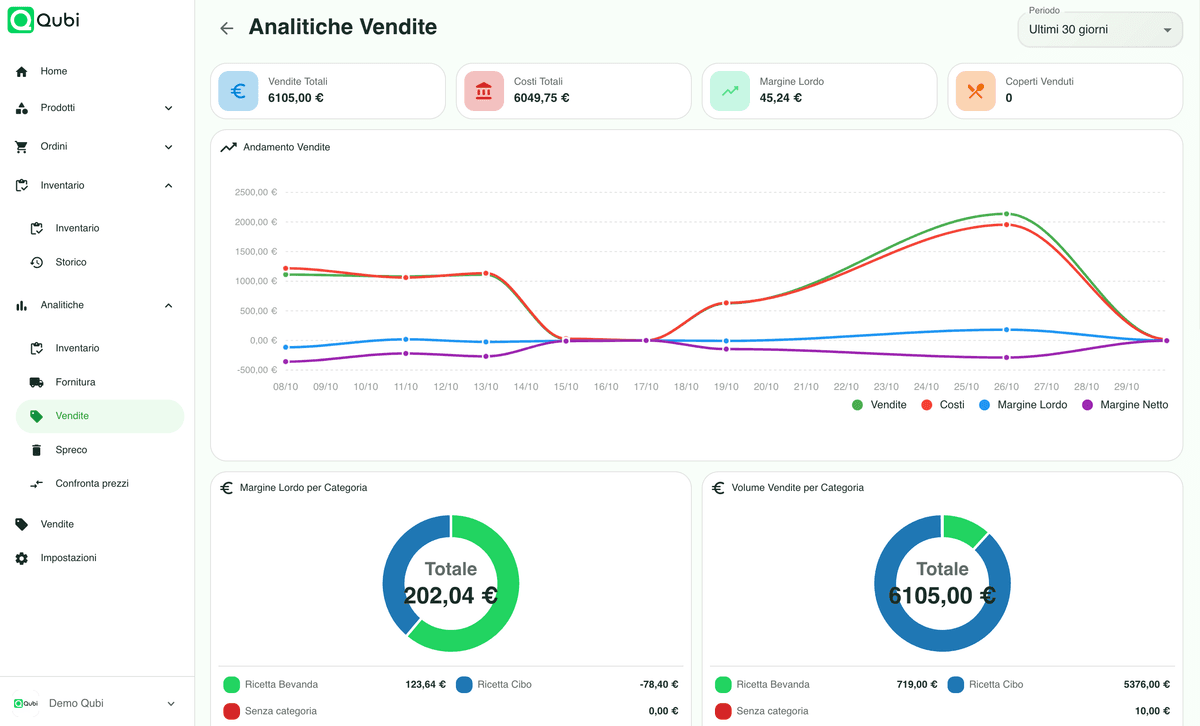
Why street food needs different software from a dining room
A truck has no store room and no office. Everything you carry has been paid for, and everything left over at the end of a wet Sunday is a loss you cannot spread over the week.
Working from a phone matters more than a big dashboard: menus, stock and orders have to be usable with one hand while the fryer is going.
Reading results per event and per pitch is what turns a season of outings into a plan, rather than a series of hopeful bookings.
Food truck software FAQ
Flexible menus, lean stock, waste, purchasing and event reporting
Can I change the menu and prices quickly?
Yes. Dishes, variants and price lists can be updated in a few taps and adapted to each event or pitch without rebuilding the menu every time.
Is it suitable for a very small stock holding?
Yes. Yields and portion sizes let you plan tight quantities, and stock indicators tell you what to load for the next outing instead of guessing.
Can I track waste and movements?
Yes. Every movement and write-off is recorded with a reason, so you can see how much of what you buy never makes it into a sale.
How does supplier ordering work?
Compare prices and conditions, build a cart and send the order by email with delivery details. Delivery notes can be imported from a PDF or a photo.
Can I compare one event with another?
Yes. Reports break down sales, margins and waste by event, location and period, so you can compare pitches and plan the season on real figures.